Thursday, October 22, 2009

Why Obama should take his time

The current debate over America's least worst option in Afghanistan has been more nuanced and thoughtful (with the obvious exceptions of Cheney et al), than most policy observers could have hoped. COIN enthusiasts and proponents of an increase in US troops have on their side the convincing math of counterinsurgency, the strategic threat posed by the risk of a destabilized Pakistan, and the history of US failure to look forward when dealing with Afghanistan. Skeptics of the American ability to successfully pursue COIN point to the history of Afghanistan as a decentralized state that a wide variety of empires have failed to alter, the lack of legitimate national government in Afghanistan (a vital prerequisite for successful counterinsurgency) and the enormous cost of the mission in comparison to the possibility of success. With a few exceptions the debate has been everything a foreign policy debate should be.

However, recently a new theme has developed, one that President Obama is 'dithering' or 'wasting time' in providing General McChrystal with the troops he needs to 'win'. Leaving aside the obviously problematic assumptions that we will win if the General has enough troops, the accusation that Obama is taking too much time is patently wrong and suggests a rush to war that must certainly be avoided. Nonetheless this argument has become somewhat of a conventional wisdom with such respected COIN and defense establishment figures as Tom Ricks and Robert Kaplan arguing that Obama had better hurry up and provide the troops.

There are three central reasons why this is wrong. The first is a response to the claim that Obama made his decision in April and is now wavering in carrying it out. This position conveniently forgets the facts of the last several months--that Obama did send troops, 17,000 more to be precise, that the so-called vital summer that would determine the rest of the war has come and gone with little improvement in security, and that the failure of the Afghan election to produce a clear and legitimate government dealt a major blow to the chances of American success. These facts, and the resulting lack of any visible signs of improvement in Afghanistan, mean that the current strategy merits a thorough review before committing another 40,000 American fighting men and women to a conflict that has now lasted twice as long as World War Two.

The second reason why Obama should not be rushed is linked the first. The elections held in August were marred by immense corruption on a scale beyond what most foreign observers had predicted. The aftermath has been no prettier with discord within the UN mission, reluctance on the part of Hamid Karzai to acknowledge any fraud or to have a run-off and daily decreasing in Afghan confidence in their central government. Now that a run-off has been scheduled and will take place within the next several weeks, the United States should wait and see what the results are before committing a major policy shift. If the run-off produces at least the appearance of legitimacy and allows the formation of a government that the UN and ISAF can begin to depend on as a partner in counterinsurgency that is all well and good--it would even be an argument for adding troops. However, if the run-off is as plagued with corruption as the election was; if the run-off produces a result seen as illegitimate around the world and, more importantly, within Afghanistan; and if the run-off illustrates the unwillingness of Afghan political elites to join the counterinsurgency effort as a partner rather than a client, then that will be a powerful argument against committing more troops. ISAF cannot win this war without a partner. It does not necessary need an immediately strong power with robust governmental control--those can be built--but it does need a partner that truly wants to defeat the insurgency and is willing to incur the costs of achieving that victory.

Finally, the administration should take their time for the simple reason that they need to get this right. This is the last opportunity for a strategic assesement that is politically tenable no matter the decision. Future reviews will be ever more hamstrung by political considerations. Obama can now decide to up the troop level, keep it the same or even begin to implement a CT strategy that requires fewer troops and not face an impossible political situation here at home. He will not have that luxury six or eight months from now when the midterms are close and the Democrats desperate to maintain control of Congress--and after the midterm comes re-election. Thus, this is the last chance for the Obama administration to make a major upward change in our Afghan mission, and they need to get it right. The fact that the Afghan winter is approaching also allows them some leeway in terms of time. Delay would likely have major consequences almost any other time of year, but as the fighting slows somewhat over the next few months, in the short term we have time to properly deliberate and reach a considered conclusion.

The argument, then, that the president has waited too long and must decide now is wrongheaded. It may be that the best decision is to increase troops levels but even if that is the case, it must be a decision reached after careful consideration of all the alternatives. Nothing would be worse that speeding to an incorrect conclusion. Thus, the president should wait until after the run-off election, or longer if needed, to declare his strategy which can then be implemented with the full will of his administration, the armed forces and the country behind it.

Wednesday, July 22, 2009

Victory for Gates and Obama on the F-22


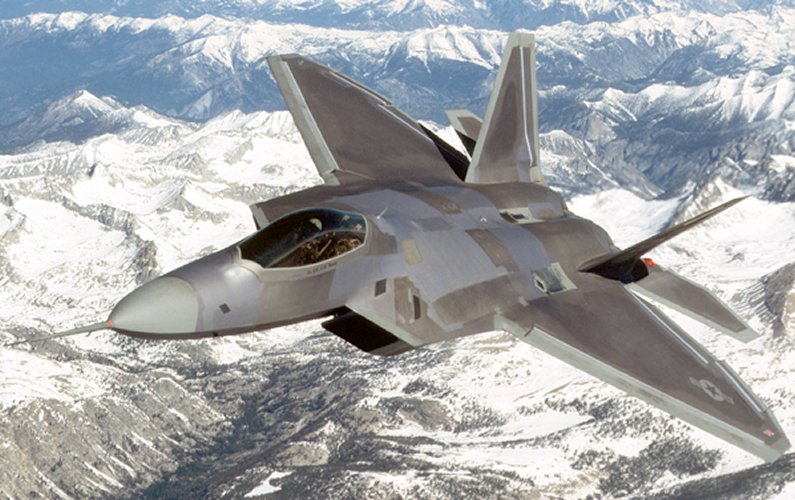
The vote on Tuesday in the Senate to strip funding for extra F-22 fighters is a huge step in the fight for sanity in defense budgeting. The vote itself ended up being pretty one-sided, 58-40, but considering that its the first time in recent memory (certainly the last eight years) that a major military program has been cut over the objection of a large and influential group. This time Gates' lobbying over the last several weeks combined with Obama's threat to veto the entire bill if the funding was included were successful in getting the money removed.

However, as exciting as it is to have rationality coming back into play as a driver for defense budgeting is great, but this should only be the beginning. Now that the remarkably potent combination of Obama and Gates have managed this, future reforms seem not only desirable but actually possible. Each step is going to be difficult as defense contractors, their armies of lobbyists and their allies on the Hill line up to prevent cuts, but with a popular President and an extraordinarily skilled and respected SecDef, reform finally has a fighting chance. Combine that with the release of the QDR early in 2010 and the next 8-10 months are looking like they may fundamentally reshape how the military decides what it needs and how it goes about getting it. It's about time.

Tuesday, June 9, 2009

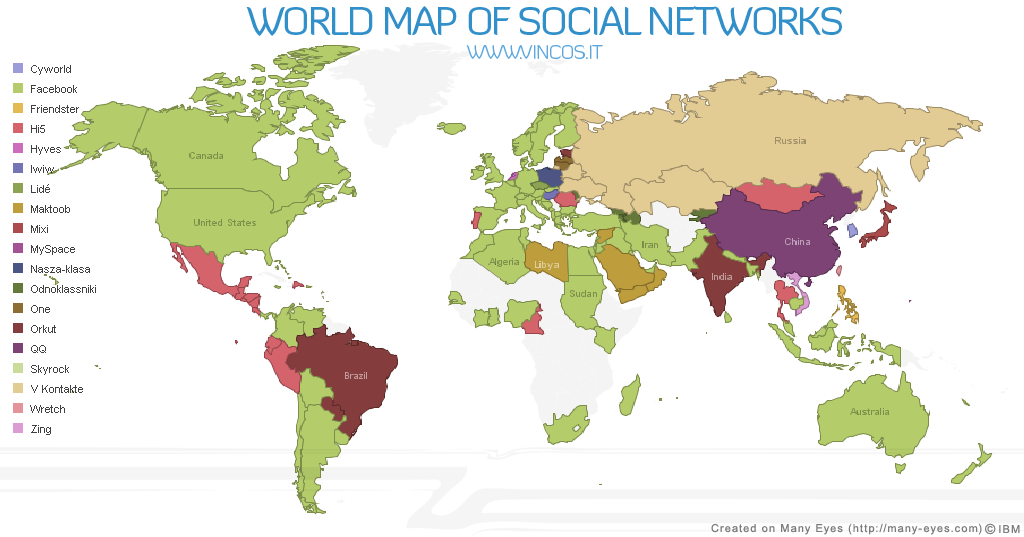
Social networks around the globe

Interesting map (h/t Sullivan) showing which social networking sites are popular around the world. Facebook is easily the most dominant (not bad for something started in a Harvard dormroom) while MySpace has taken a serious hit and ranks first nowhere. Also interesting to see that Brazil and India share a site. I'm not sure how much this kind of stuff actually matters except as something fun to know but it's noteworthy that the places where Facebook has dominated seems to those places that get the vast majority of gap year and student travelers. Where those people like to go, i.e. Australia, South America, Europe, Facebook has taken over.

NYT learns COIN

Yesterday's Times editorial discussed American policy for Afghanistan policy and specifically addressed the issue of metrics and how the United States should be evaluating the success or failure of that new policy over the next year. Now it's not perfect but the editorial displays an impressive level of understanding of the tenets of counterinsurgency that would have been unthinkable just a few years ago. Perhaps they read Abu M's new report! Wherever they got their insights, they're good ones and outline pretty much exactly what the US should be doing in terms of understanding whether the new strategy is working in Afghanistan.

Dept of Amazing Jobs

Repossession men tend to have a bad reputation, sneaking off with someone's car or forcing them to leave their house. But what about a repo man who takes airplanes and yachts--taking back the toys of the rich from their delinquent owners who aren't paying for their learjet? We can get behind him, particularly when he's been doing it for 20 years, has repo'd over 1300 airplanes and has landed in jail in Haiti and other less than lovable countries. Read the whole thing in Salon, it's a fantastic story--particularly the bit about the 240 helicopters....

Thursday, May 28, 2009

Bill Clinton NYT mag interview


Peter Baker has a long story/interview about Bill Clinton in this week's NYT  magazine. It's a interesting and fair-minded portrayal of the former president and seems to show that he's begun to accept life as a former president and that the effects of last year's campaign (where he seemed to run the risk of ruining his legacy in the eyes of many dems) are over. Instead, he's dedicated himself fully to his foundation, has stayed largely out of the public eye and, while he's never shy in front of the camera, doesn't seem to need the constant attention anymore.

One of the more interesting sections of the article is Clinton's self-criticism about his role in the financial crisis. While he does argue that many of the Republican's claims about his responsibility are insance, he does take responsiblity for the things he thinks he missed. In particular, he wishes he'd had more foresight on derivatives (though, I wonder who doesn't wish anyone had had more foresight there) and to a lesser extent regrets the repeal of the Glass-Stegal Act, though he argues if the SEC had done its job, that wouldn't have mattered as much. It's an interesting read and seems to capture the 42nd President very well.

Tuesday, May 26, 2009

Does Iran really want nuclear weapons?

Fareed Zakaria has an interesting opinion piece in Newsweek this week
arguing that the real powers-that-be in Iran have been fairly
anti-nuclear weapon for years and that reversing now could have
seriously repercussions for their religious legitimacy. This is largely
because in the past they've phrased anti-nuke rhetoric in extremely
Islamic language--language it's not easy just to forget or move past.
Check out this line from Iran's Supreme Leader, Ayatollah Ali Khameini, given in a sermon in 2004:
"developing, producing or stockpiling nuclear weapons is forbidden under Islam."
It's pretty tough language to walk back and, as Zakaria points out, it would be pretty odd for a regime that claims legitimacy based on its fidelity to Islam to want to develop nuclear weapons even as it argues that they are un-Islamic. Just on the face if it, it's pretty terrible PR, something Iranians have tended to be pretty good at.

Just by airing this viewpoint the article raises a fascinating point about the perspective most Americans approach this issue with. We are trained by the media, our own government and other external actors (no names given) to see the Iranian regime as a suicide cult of death merchants. It couldn't be farther from the truth but that narrative never gets challenged. Thus, while Zakaria's article will probably shock a lot of the America audience, the real surprise should be how uninformed the American people and officials are about Iran and its leadership.


Monday, May 25, 2009

Waterboarding transcripts

The Atlantic's Jonathan Bines somehow got a hold of the very, very top secret CIA's transcripts of Abu Zubayday's 83 waterboardings. They make for a hilarious read....personally, my favorite entries are 5 and 6:

5. You can’t do this! Show me the authorization for you to do this!

6. Wow. O.K., technically, you can do this. Although the quality of the legal work in these memos is shoddy at …

NYC/London still the top finance centers

The ranking of world financial centers came out recently and while it's not full of surprises, it is interesting to see the change in ratings since last year. The top two, London and NYC, fell 10 and 6 points respectively but the cities just below them, including Singapore, HK and Zurich fell an average of 15 points. Other cities farther down the list suffered as well, but the only one to have fallen badly in terms of rank is Tokyo, going from 7 last year to just 15. Shanghai still doesn't make the top 20, but perhaps over time it will continue to steal some growth from HK and push its way up the list.

GOP continuing to lose ground

This news is about a week old, but is worth flagging nonetheless. A new Gallup poll was released showing Republican party identification down in virtually every group since 2001. Some declines are sharper than others, college grads dropped 10%, non-graduates only 3, but it is a pretty depressing graph for those trying to push for a Republican renaissance.

Metro maps

Most subway or metro maps match up pretty horrendously with the actual city around them. Think of the London tube map: a complete misrepresentation of the above ground city in order to make it easier to understand. The same can be said of the NYC subway and, to a lesser extent, the DC metro. This set of illustrations of 15 or so major cities' metro networks done to scale is a pretty interesting comparison. It's the type of thing that forces a rethinking about how extensive the best metro systems are. Paris, for instance, has one of the best metros, but its system covers an incredibly small area. LA is the reverse, as Philadephia. Of course, not all systems can be as large or as extensive as the Tube or Seoul metro, but it's worth looking at the differences in metro-system size between cities that invest in public transportation and those that don't.

Quote of the day

Christopher Buckley has posted his Yale commencement speech and it's worth reading albeit slightly self-important sounding. But it did contain this gem:

I never thought I’d be looking back on the Cold War with nostalgia.

Life used to imitate John le Carré novels. Now it imitates Tom Clancy novels. As an English major, I’m not sure this represents progress.


Broadway Pedestrianized?

Via Felix Salmon it appears that part of Broadway, between 47th and 52nd, is going to be closed to traffic and walkways, grass, plants etc installed to make a pedestrian zone. If the pilot project is a success, it could be expanded to include larger and larger chunks of the major avenue until, quite possible, the entirety of Broadway could be a park!

The project is the brainchild of Janette Sadik-Khan, the city's transportation commissioner and it is hoped that shutting down some of the busiest portions of Broadway will both improve the area's tourist and retail appeal while at the same time reducing accidents around some of the city's most dangerous traffic intersections. From an urban-planning perspective it's a fantastic concept, one that will open up a large chunk of midtown to pedestrians while encouraging public transportation. As the NY mag article says, wouldn't it be amazing if New York ended up with two major parks? One as old as the city, the other a 21st century innovation?

Update: Check out this NYT slideshow of Broadway having undergone the change


Tuesday, May 19, 2009

Harry Reid's tough life

Gail Collins had a great op-ed over the weekend detailing life as Harry Reid--and all the joy he must be having with a uncooperative yet, at least in the media's mind, invincible majority. Reid gets a lot of criticism and much of it is generally deserved, but it is worth bearing in mind the fairly raw hand he's been dealt and the uncooperative senators he has to wrangle into line.

Monday, May 18, 2009

What Rumsfeld Wrought

For anyone who hasn't seen it I highly recommend Robert Draper's excellent GQ article on Donald Rumsfeld. It's an insiders account with narratives from several, albeit anonymous, former White House and Pentagon staffers of Rumsfeld actions during his tenure as a SecDef. The stonewalling, the obfuscation, the refusal to engage with anyone he didn't like. Interesting stuff, terrifying how long he lasted.

Wolfram Alpha

The next generation of search engines is one the horizon and the first one it its class is WolframAlpha. Unlike a typical search engine which simply provides links to information, WolframAlpha actually gives you hard data related to your search. Type in NYC population and up pops demographic information and historical trends. It's still limited (it doesn't recognize a lot of more complex searches) but it halves the online distance one needs to go to get information. Well worth keeping an eye one and following as it develops.

h/t Ezra Klein, now at his fancy new spot at the Post

Tom Ricks on FDL

The author of the Gamble held an online Q&A session on Firedoglake yesterday. It's here for those of you who watched the basketball instead! Hosted by Spencer Ackerman it didn't suffer from too many idiotic rants/questions but instead raised some interesting points on both the surge and, more relevant to today, the question of whether the Pakistani police are up to the challenges of COIN, especially as it's becoming clear the military isn't pulling its weight.

Sunday, May 17, 2009

McKiernan Out, McChrsytal in

Fred Kaplan continues his string of great articles with a very good explanation of the motives behind the leadership shakeup in Afghanistan and how it will play out. Well worth the read.

Bringing in a new set of brains (and General McChrystal and his deputy General David Rodriguez have two of the best) is certainly not a bad thing to do. And it would appear that McChrystal has an affinity and knowledge of small wars that McKiernan simply lacked. However, a change in leadership is not a substitute for a strategy and so in the coming weeks it will be important to look for concrete changes at the national and regional level in how US and Coalition forces are reshaping the focus on counternarcotics assignments, roadbuilding and other infrastructure projects, and whether they are utilizing tried and true population-centric COIN tactics. If that's the case, then perhaps attacks will go up, like in Iraq, for a while, but by the end of the year progress will have been made.

100 days

The fuss over Obama's first 100 days has been pretty ridiculous. It does, however, give me an excuse to link, albeit belatedly to this great version done as a facebook feed.

Catch-up

It's been a while, but while I've been attempting to study more and spend a bit more time reading foundational COIN texts a multitude of interesting articles have sprung up. Here's what I've been reading in no particular order:

--Al Qaeda has a new recruitment manual designed to provide recruiters with techniques for attracting new members and tips for recognizing the best potential extremists.

--Two articles on torture and why it was such a terrible misstep (not to mention morally repugnant) in the fight against Islamic extremism. First, an interview in Time with Ali Soufan, the FBI interrogater who just testified on Capitol Hill (and profiled fascinatingly in the New Yorker), and second, a NYT op-ed by Philip Zelikow on the problems with torture's utility.

--From Foreign Affairs, what to read on American Primacy--and while we're on book lists, Abu M has updated his COIN list.

--West Point leading the way on cyber-defense. Great article on what will surely become ever more vital to American security: protection of the computer systems our government and society are based on.

Tuesday, April 28, 2009

Is the Taliban worth fighting?

Most Americans, and indeed most American policy-makers, take for granted that preventing the Taliban from gaining control of Af-Pak is essential for American security. Not so says John Mueller in the latest issue of Foreign Affairs. The Taliban itself have limited interests outside their own region and are unlikely to provide a base for Al Qaeda in the near future given what happened last time. Mueller argues that preventing the Taliban from reestablishing control in Afghanistan may not actually be worth the fight, and that it actually isn't a requirement for American security.

While he's probably right about the Taliban not being particularly interested in external conflict the situation in Pakistan is such that we can't simply ignore Afghanistan. Policy-wise the US must deal with both of them so to argue that the US should get out of Afghanistan is ultimately not particularly useful unless one can figure out how to fix Pakistan.

Ali Soufan in the NYT

Must read piece by one of the FBI's finest young agents who was involved in the early interrogations of Abu Zubaydah in late summer 2002. He's come forward for the first time to reveal that he, working with another FBI agent were able to gain valuable, actionable intelligence (including intelligence later claimed to have been gained via waterboarding) using traditional interrogation techniques. It's yet one more example of why the torture regime authorized the last administration is not only illegal and immoral, but also ineffective.

Defeating Pirates

This is a bit old but Fred Kaplan at Slate has a good article on how the world should take aim at the pirates operating with apparent impunity off the Somalia coast. Some of it is wishful thinking, but the ideas a certainly good ones.

In other news, on Sunday an Italian cruise ship fended off a pirate attack with handguns and firehoses!

Tuesday, April 21, 2009

The godfather of blogging

I'm sure most people have seen it by now, but if not Johann Hari's profile of Andrew Sullivan is a fascinating look at one of the most influential writers, and likely the most influential blogger, in America. Hari charts Sullivan's life from his youth as a lonely Thatcher supporter in Northern England, through to his days at Harvard, TNR and his great success as one of the founders of blogging. Hari is charitable some respects to Sullivan's point of view, but there is no doubt that the man set the stage for the proliferation of blogs as real journalism and has really been at the center of the blogosphere from the start.

Interview with Tom Ricks


Michael Totten, back stateside, has a great interview with Thomas Ricks covering his new book, his thoughts on the origins of the surge and where the situation in Iraq is going to go from here. It's well worth reading, though it is rather depressing to hear just how negative Ricks' view of Iraq's future is. He envisions Iraq becoming worse than Lebanon (which would be his ideal) and sees instead a country closely aligned with Iran, lead by a strongman in the vein of Saddam and before that all happens, a bloody civil war. So not a great prognostication.

The New Yorker

Two classic articles from recent editions of the New Yorker. First is Anthony Gottleib's wonderful history of the Wittgenstein family. It's a classic description of a family plagued by neurosis, depression and suicide which overshadowed the brilliance of many of its members.

The second is David Sedaris at his best, describing his interactions in the bar cars of the world's railways. Written in the conversational but darkly humorous style he has mastered, it is well worth the read. One of the things I miss most not being in the US is the New Yorker. While I subscribe fully to the theory that print journalism is on the decline, I think certain niche publications will awlays retain an audience. For me, while I read voraciously online from short blog posts to long feature articles, I'll go out of my way to get my hands on a hard copy of the New Yorker. There really is nothing like it.

America politics ignores Rawls

The title of this post is a statement I think few would argue with. Despite ruminations by commentators, political philosophy students and, yes, bloggers (including yours truly) the great political philosophers have little effect on the current political climate. Thus, Rawls and Oakeshott haven't won Democrats and Republicans many seats and are unlikely to do so anytime in the near future. For a good rundown on why this is the case check on this post by

Dangers of the Ivory Tower


I have long thought that one of the benefits of the American university system over the English version is the interaction between professors, think tanks and public service. It is by no means unusual for an GWU social sciences professor to have served in government, often as an executive branch adviser of some sort, then to have spent time formulating and adivising on policy from the outside be it in a think tank or as a analytical journalist before starting a professorial career. This rotation, and it need not be in that order, helps keep academia in contact with the 'real' world, helps think tanks and other institutions produce innovative ideas and lends an introspective and academic air to governance that often is hidden by political agendas. Thus, this article by Joseph Nye in the WaPo presents worrying findings that fewer and fewer academics immerse themselves in public life but instead remain focused solely on their studies with little concern for their relevance to the outside world. If this trend continues the US could well end up like the UK where an Oxford don and a civil servant view dismiss each other's work as irrelevant to their own. Such a situation would damage both academic research and the public good.

Thursday, April 16, 2009

Quote of the day

"The truth is that the French have never really got over being dumped at the altar of the “special relationship.” It should have been them. It was after all, the French who gave you the Statue of Liberty and the keys to the Bastille and who think Jerry Lewis is funny. What did the English ever give you? Muffins and a burnt White House." A. A. Gill, NYT

Government debt: a primer

Peter Orzag has a post from some days ago explaining government debt, the various forms it takes, and which number is the most meaningful in terms of what the government actually owes. The blog overall is very good and the the content of this post is something everyone who comments on budgetary affairs should understand---though somehow I doubt that's the case.

Font game

Those of you who know of my soft spot for design will understand why I'm posting this. Otherwise, ignore it. This fantastically difficult game has sent me searching through Word in an attempt to remember which fonts are what!

US Iraq Commander Joins Facebook

General Ray Odierno has joined facebook! Now all the counterinsurgency groupies can follow him online as he attempts to maintain the ever-more fragile Iraqi peace, attempts to keep the political reconciliation process from falling apart completely and oversees the beginnings of American troop withdrawals. Maybe we should start some '1 Million Strong for Ray' groups...

Are Strunk and White overrated?

It's been fifty years since the first edition of Stunk and White's Elements of Style was first published and since then millions of high school and college students have pored through it, searching for the answer to their split infinitives and passive voice. However, is it overrated and even unhelpful to the degree that it's positively bad for one's grammar? The head of Linguistics at Edinburgh University thinks so and he has written a screed against the grammar guide that is well worth the read.

The Federal Budget

Fantastic graphic (I'd love to get the hard copy) of how the federal budget is divided up between government agencies. Especially in light of the the April 15 protests, it's good to see where the money actually goes. People declaiming about high taxes should first be required to identify which bit of this chart they'd chop off.

Monday, April 6, 2009

The next Routemaster


One of Boris Johnson's campaign pledges was to bring the routemaster bus back to the streets of London. After he won, the mayors office held a design competition and there should be a new routemaster traveling the streets of London in the coming years based on the concepts articulated by the competition's winner. Check out this article on the new bus, as well as other modern bus designs. Now if only more US cities would begin to take mass urban transport a bit more seriously.

Will Wilkinson outs himself

From the Cannabis Closet that is. Following Andrew Sullivan's series documenting the regular Americans who enjoy smoking marijuana comes Wilkinson's op-ed calling for sane thought on the issue and criticizing Obama's flippant response to the legalization question last week. While there is little doubt that marijuana should be legalized, the political battles that would be needed to do so could soak up all Obama's remaining political capital--capital he needs in order to sheperd the country out of economic collapse. That said, the issue deserves serious debate and it is a depressing indicator of the prohibitionist streak that runs through this country that those who would address legalization are laughed off and disregarded.

Update: Joe Klein also has an article on legalization in Time from last week and while he doesn't confess to enjoying the odd smoke himself, he argues that the myriad of good legalization would bring about far outweighs the arguments against, most of which are easy to counter anyway.

Exum on Maddow

Andrew Exum was on Rachel Maddow this past week talking about his TNR column on terrorist safe havens. Video is below and is well worth watching. As I've discussed previously, Exum's concerns are valid and need to be considered, but at the same time the situation in Afghanistan and Pakistan demands that the US address the problem of terrorist safe havens. Thus, while the precedent such haven-denying action could set is problematic, I'm not sure we have a choice given the situation on the ground in Central Asia.

On a related note, Exum has linked to Mike Innes' critigue of the TNR column. Innes argues that Exum overstates the ability and influence of the internet and is too general when discussing physical havens. He sees the internet as a messaging vehicle--useful but only if you have the set up to utilize it correctly. Innes sees the larger problem as one of dispersed transnational terror networks which utilize disparate small safe havens in multiple areas where their belief strucuture is supported. Here's the whole thing.


Election Nostalgia

Missing the thrills of the 2008 election cycle? Want to rehash those days when we all obsessed over Apalachia, Alaska and the alcohol preferences of large swathes of the country? If so, then this slideshow from The Electoral Map blog is just the thing for you.

h/t Ezra Klein

Procrastination Vindicated

At least in moderate amounts. Via Freakonomics comes an Australian report that suggests those who spend up to 20 percent of their time browsing the internet are actually more productive than other workers who focus exclusively on their work. University students around the world will rejoice at these findings, though keeping ones procrastination tendencies to 20 percent of ones time may be a challenge for some. I know I'll find it difficult!

Thursday, April 2, 2009

A fragile peace begins to crack

CAP's Brian Katulis has a good article on their website outlining the cracks that are beginning to appear in the fragile peace currently experienced in Iraq. Confrontations between the Sunni 'Awakenings' and the official Iraqi security forces (predominantly Shia) will likely continue and even escalate as more and more of the Sunni forces feel that the government is not doing enough to include them in political activities nor hiring enough of their soldiers for the official army. Katulis outlines the problems and argues that although many in the US, particularly on the right, will call of Obama to slow any plans for troop withdrawal, the President must stick with the plan as it currently exists and begin to pull out American soldiers. He makes the accurate point that Iraqis will never be able to acheive full political reconciliation while the US military keeps the opposing sides at arms length from one another. However, his article fails to address the problem of Iraq descending into chaos as various groups attempt to consolidate power. There are few satisfactory answers to that question from either side but it is one that must be addressed as Iraqi elections, and US withdrawals, move inexorably closer.

Holbrooke goes to Af-Pak

Interesting if slightly one-sided look at Richard Holbrooke and what his diplomatic role in the Af-Pak situation will entail. He has earned a fantastic reputation for his skill at diplomacy and despite the worries of some (including the author) that he is over confident in America's ability to do good in the region, he is almost certainly the right man for the job. He seems to have learnt the lessons of Vietnam and imperial overstretch but remains optimistic in his and America's ability to bring at least a semblance of security and stability to the region.

Wednesday, April 1, 2009

Jim Webb's courage

Senator Webb's new crusade to reform the American criminal justice system has earned him plaudits from both sides of the aisle as he attempts the thankless and politically risky confrontation with the 'tough on crime' mentality that has held American political views hostage on this issue for decades. Glenn Greenwald has a great run down on the topic and how, with no apparent motive apart from a sense of justice, the Senator from Virginia has decided to address what has become an American tragedy. To quote Webb's floor speech, "We have 5% of the world's population; we have 25% of the world's known prison population. We have an incarceration rate in the United States, the world's greatest democracy, that is five times as high as the average incarceration rate of the rest of the world." It is high time this problem was addressed and all credit to Senator Web for taking up the cause.

Aaron Sorkin as Shakespeare? or better?

Interesting piece articulating how the human mind is limited in its ability to inferring the mental states of others. Shakespeare had incredible abilities in this regard, as exemplified by the complexities in plays such as Othello. However, Sorkin seems to go even farther into with his complex plots, reaching even higher in terms of orders of understanding than even the great playwright. So while even the greatest West Wing aficionado would be unlikely to rate the screenwriter higher than Shakespeare, he does seem to have surpassed the Bard in terms of intricacy and complexity.

Safe Havens: Physical vs Online

Andrew Exum, perhaps better known as Abu Muqawama has an op-ed in The New Republic. It's must read stuff outlining the importance of Al Qaeda's online forums as tools for recruitment--tools just as vital for their continued existence as physical camps in Afghanistan and Pakistan. However, current US strategy is focused predominantly, (Exum suggests even obsessively) on rooting out the actual training areas and has thus far expended little effort in counteracting terrorist activity online. It's a thorny problem, one that traditional COIN tactics are not particularly well-equipped to handle. This is not to say that American efforts in Af-Pak are necessarily misguided, but simply that they should not be assumed as remedying the problem entirely. In addition, Exum questions the precedent that rooting out Al Qaeda in Pakistan may set. Does that mean the US will be obligated to follow Islamist extremists wherever they set up shop? If so, will the US be invading Somalia? Iran? Germany (where the 9/11 hijackers planned their attack) These are all questions needing much more discussion as future US policy continues to be formulated.

The profitability of skype

The question as to whether it will be possible to turn what are largely free internet programs into profitable companies is one that has vexed online entrepeneurs for some time. This article argues that of all the web 2.0 services out there, skype has the greatest chance at becoming a truly profitable enterprise. As opposed to Facebook and YouTube, Skype is profitable as a stand-alone business and had revenues of 500 million dollars in 2008. With each user it becomes ever more profitable, something that cannot be claimed of services such as MySpace et al and so Skype may well be eventually considered the new Amazon or the new Google.

Doug Feith and Pashtun Poetry

Who knew Doug Feith had a soft spot for traditional Pashtun tribal poetry? This fairly ridiculous column in the NYT suggests that the US needs to do more to counteract the Pakistani Taliban's reign of terror against Sufiism and traditional tribal culture. On the face of it, fair enough. But coming from Feith it's amazinly brazen given his role in the run-up to and mishandling of the Iraq war and more than slightly odd that he sees this as the most vital tactic the US needs to be engaging in.

Police in Af-Pak

Foreign Policy continues its string of interesting, insightful articles on the Af-Pak situation with this article from Robert Templer. He argues that policing has been overlooked and underdeveloped by coalition forces in Afghanistan while the Pakistani police are sorely lacking in training and equipment.

The problems plaguing the Afghai police are well documented. The police force has long been seen as less important than the Afghan army. That concentration on the military has paid dividends and though the size of the armed forces needs to be increased, it has managed to flex its muscle against the Taliban with decent results and it is also perhaps the most trusted institution in the country. However, the lack of focus on the Afghani polise has left it tiny, in disarray, and its leadership corrupt. Refocusing on the police force is vital to begin to provide the rule of law that America's new counterinsurgency strategy demands. That means cops on the beat and on the corner able to prevent crime as well as respond to it. In addition, the formation of a stable and competant poice force is the first step in reviving the institutions of law and order such as the courts and prison system.

Across the border in Pakistan the problem is just as difficult if not more so. Police are deprived of resources and the bulk of American aid for fighting terrorism goes to the army with very little ever trickling down to the police who are on the front line in both the tribal regions and, increasingly, in supposedly safe cities like Lahore. It remains to be seen whether the new American strategy will be able to funnel much needed resourvces to those in the Pakistani security forces who really need them.

War in Pakistan?

A good followup (from this questioning post) by Noah Shachtman on whether the US is actually at war in Pakistan as well as in it's neighbor. From the looks of Obama's policy it appears the answer is yes. American predator drones and American cash are certainly at work in the northwest tribal regions of the country and it is not beyond the realm of possibility that American advisors and trainers might one day also end up there.

Afghanistan's Past

Peter Bergen had a interesting column in the NYT a few days ago reminding people that the history of Afghanistan is not just a litany of imperial defeats. He describes the victories of Genghis Khan and the oft-forgotten British victory several decades after their much heralded defeat. However, the forces needed to pacify and then rest the country numbered in the hundreds of thousands and took decades, not an experience the US is in any hurry to repeat.

So while Bergen provides some comfort by providing historical examples of successful missions in Afghanistan, it's cold comfort in terms of the numbers of soldiers needed and years invested in the country.

Sunday, March 29, 2009

WaPo reviews Obama's Afghan Policy

In a feature I've never noticed before, called Topic A, the Washington Post has gotten several experts on the Af-Pak problem to comment and critique the strategy laid out by the Administration this past week. Several counterinsurgency thinkers are there including Nagl and Ricks along with the eminent military strategist Dennis Kucinich! Read the whole thing.

Pakistan for dummies

Foreign Policy have posted a great intro to the regions of Pakistan, the confusing maze of tribal loyalties and the different armed groups that operate in those tribal areas. Fascinating for anyone interested in the Af-Pak war who hasn't studied closely and really should be required reading for anyone in the public sphere before they open their mouths and opine on what needs to be done.

Also, if, like me, you can't always remember quite where Swat Valley is in relation to Baluchistan, then take a look at this map as you read. One thing that always strikes me as interesting whenever I see it mentioned is that Swat Valley, perhaps the strongest of the Taliban strongholds, actually shares no border with Afghanistan.

NYT profile on Orzag

The New York Times has a longish profile on Peter Orzag, director of the OMB. Worth reading, if only to note the high-powered and influential role Orzag is trying to create for himself, a shift from previous directors, and the apparent tension between him and Lawrence Summers, the President's Chief Economic Advisor.

Obama to meet with Cameron

David Cameron has scored a meeting with Obama, a real victory for the Conservative leader. It would appear that Obama has been reading the poll results in England and is keen to establish a relationship with the man who will likely be the next Prime Minister as soon as possible. For Cameron it's a great opportunity to atract some of the Obama limelight and could be useful as he attempts to position himself as the man best suited to lead Britain.

Saturday, March 28, 2009

Madoff's Lobster

Fantastic short story by Woody Allen in the New Yorker's Shouts and Murmurs. Oh that Madoff would actually get pinched!

The Army's Future Role

Two very interesting posts on the future of the US army and it's role in protecting American security. First we have Steven Metz arguing that we will see a decline in the relevance of the US army as its traditional role of taking and holding physical territory becomes less and less vital. While there has been little discussion of this shift within army circles, as non-state entities increasingly become the greatest threats to the US, the need for the tank and cavalry divisions will diminish.

The second article is by Michael Cohen at Democracy Arsenal arguing that Metz is correct and that people such as John Nagl and Gian Gentile are wrong. Nagl and Gentile have argued that the army must adapt to COIN or remain ready to fight a major land war, respectively, but Cohen agrees with Metz that the face of wars fought by the US will change in the future. He argues that COIN is unlikely to dominate as the US people do not have the fortitude to continue fighting that type of war and that major land wars are a thing of the past.

Cohen and Metz are right to a certain extent but I think forget that eight years ago few people thought that COIN would be a necessary tool in the American Army's repetoire for the near future. Thus attempting to predict what type of forces and tactics will be required is by no means a sure thing and having forces that can fight both COIN and major land wars is importnat for America's security for the forseeable future.

Also, wars force adaptation and while they are correct that many of America's threats will come from non-state actors, that does not mean that individual tactics related to either school of thought won't be necessary. For instance, COIN-tactics could well be very useful (and indeed some are being introduced) in fighting the cartels in Mexico. Thus Cohen and Metz, while right in thinking that the army needs to rethink its role, are less correct in suggesting the time of the US army as passed.

Wall Street's letter to Congress

Via TPM, the Wall Street traders association has sent a letter to Congress complaining about the bonus taxes and generally whining about how Congress has treated them during the economic collapse. They show an amazing lack of historical awareness considering they've had the better part of a decade of unregulated profiteering!

Friday, March 27, 2009

Baghdad Life

Michael Totten has a fantastic long post on life in post-surge Baghdad. While no longer a war zone it's be no means quiet and tensions between communities still exist despite the relative peace and quiet. It's a fascinating look at the day to day activities of the US military there and provides some slightly concerning foreshadowing of life after the bulk of US forces withdraw. While withdrawal is almost certainly the right course of action in 2009, the possible relapse of violence from sectarian conflict, from militants currently paid to keep quiet and from AQI is a worrying prospect.

Brooks on Afghanistan

David Brooks has an interesting column in yesterday's Times about the future of America's Afghanistan effort. His skepticism, thanks to the challenges, leavened by optimism, having met the people doing the work, is fairly common among commentators writing about the region. Interestingly, his column indicates that he would support Obama's plan for the country, yet another issue separating the NYT columnist from much of the conservative base.

Ricks and Kilcullen in the Economist

A bit belated, but The Economist reviewed The Gamble and The Accidental Guerilla a few weeks ago. Interesting review and worth the read, despite their not entirely fair criticism of Ricks.

ISI aids the Taliban

Reason number 462 why Pakistan is just as large a problem for the Obama administration as Afghanistan…if not a larger one. If the Pakistani security forces are actively engaged in aiding the Taliban against the Afghani and Coalition forces then shouldn’t we cut off aid to such forces? However, if we do cut off aid, how does the US prevent the Pakistani government from collapsing and extremists take over? Just one of the regional catch-22’s facing the US government.

World War Two as a cartoon

Priceless

Intro to Sharia Law

Interesting CFR release outling the basics of Sharia law, its practices and how it interacts with common law in different countries around the globe. Should be required reading for everyone who goes in front of a camera to discuss Islamist extremism and I highly recomend it for everyone else!

Typeface nerds unite!

Fascinating post on the thought process and design of a new font. It’s an interesting process, one that impacts everyone who uses a computer but one that no one really knows or cares about. Graphic designers deserve their moment in the sun along with everyone else!

Hitchens on the Israeli army

Only occasionally (rarely?) do I agree with everything in a Chris Hitchens column, but he nails it here. The US has to start being a better friend to Israel and telling it that it can’t use religious motivations for its actions against the Palesinitians and expect to receive military and economic aid is as good a place to start as any. Seriously, how can telling soldiers their religion mandates kiling innocents be a good idea in any context?

Calling home

Contacting home while travelling has always been a challenge but now, as this article illustrates, it’s now incredibly inexpensive. However, it still is fairly complicated as evidenced by the number of software programs required by the writer. How long will it be before we have a world mobile network? ever?

Media still behind times

Despite their attempts to catch up to the current times, the MSM still cannot figure out how to provide good coverage of politics. Their questions at the most recent Obma presser were nothing short of abysmal. And rather depressing to us laypeople paying attention who seem to understand the stakes better than the so-called professionals. Read this fantastic rant on how bad at their job the pros really are.

Finklestein makes sense

Very good piece on the trade off between tax cuts and stability—and what the Conservative position needs to be. However, his fellow conservatives on this side of the pond don’t seem to be listening.

A Catholic Newt

Christopher Buckley’s fantastic takedown of Newt Gingrich and the Catholic church as the former speaker converts to Catholocism despite his convoluted marital and moral history. Buckley and the Daly Beast at their best.

To add to my book list...

Kilcullen’s latest book: Accidental Guerilla

Army Field Manual 3-07: Stability Operations

Kilcullen in the WaPo

Check out every counterinsurgent’s favorite Autralian anthropologist interviewed last week in the Post. Blunt as ever about the problems facing us in central Asia, he explains the challenge of keeping Pakistan from collapsing entirely…and what such a collapse would mean.

Online advertising: a failed model?

Interesting article on TechCrunch about why internet advertising’s current model doesn’t work and why revenues will continue to fall. How many of us have actually clicked on a sidebar ad (not by accident) in the last month?

The Right's Economic Cluelessness

The global currency meme that has gripped the right this past week has to be one of the most entertaining bits of economic cluelessness in recent memory. It certainly provides some much needed comic relief during these rather depressing times. The combination of Drudge, Bachman and Fox and their joint inability to understand econ 101 is truly hilarious.

CAP's Afghanistan Plan

CAP has released it’s plan for Afghanistan, a week before the Obama Administrations will release it’s own strategic review. The CAP review downgrades expectations and concentrates on providing basic security and preventing Al Qaeda from using it as a base of operations. Read the whole thing here.

Decline of Culture11

Interesting article on the brief rise and then collapse of Culture11. Unfortunately, one of the right’s most promising, and most interesting, organizations that could have helped rejuvenate the party and reform it into an electorally viable proposition has not received the institutional support that it required.